

Archetypes in Hypnotherapy: A Healing Technology
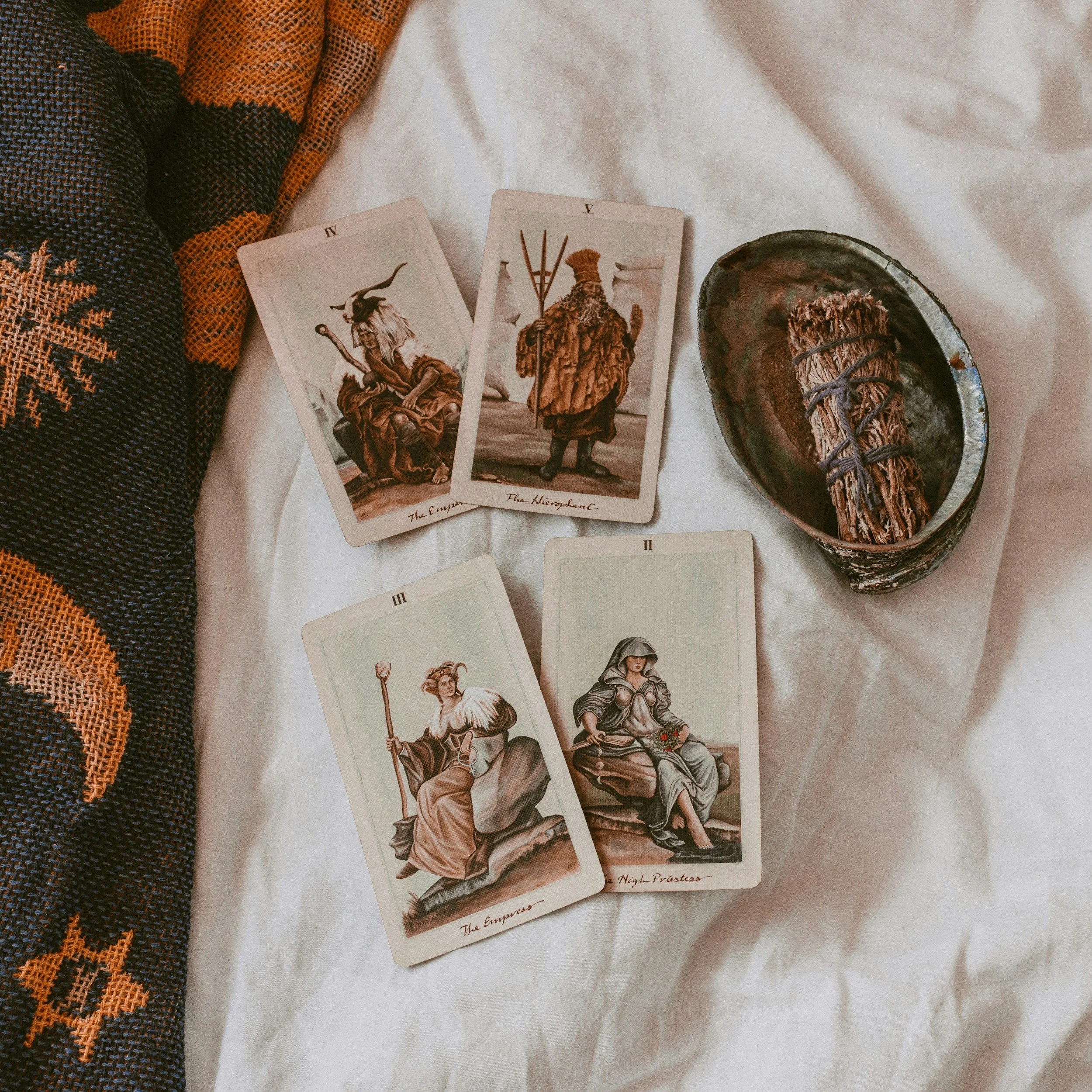
The word ‘archetype’ has been creeping into the wellness industry as a term associated with dreamwork, hypnotherapy, art therapy, narrative storytelling, Tarot, and of course Jungian psychology (which folds in many of these practices.)
So what are archetypes, and how can we use them to heal?
Definition of Archetype
While archetypes and symbols are related, they are distinctly different. Archetypes can be thought of as organic organizing principles—in other words, patterns that have resonated throughout history with different levels of human experience. We may find archetypes in our colloquial language and label someone a “dumb blonde” or a “free spirit” or a “party girl”—it is not the whole of their experience, but a facet of someone’s nature that we are using to identify them and perhaps predict a behavioral pattern or come to feel more familiar with them.
Application in Hypnotherapy
The objective in hypnotherapy varies from client to client, and yet the intention for the practitioner remains the same (in my opinion, anyway):
How can I offer my client a mirror that reflects the truth of who they are?
How can we enchant the mirror to act as a portal to their preferred reality or new identity?
For instance, if you lack confidence and would like to be a more confident person, you might try self-help books and therapy for a few years before realizing that your subconscious mind has been blocking you from feeling more confidence. No matter how hard you try, you cannot seem to break this pattern.
In a session with me, we would spend a small amount of time talking about your problem so that I can get a sense for the words, sensations, imagery, and archetypes that already exist around this issue.
Then once you are induced into a relaxed but focused state (aka hypnosis), I might guide you to a meadow (archetypal image of expansiveness) and introduce you to a friendly helper or guide (whatever your subconscious comes up with from the relaxed trance state) and they might lead you to a body of water (archetype of cleansing, renewal). Whatever antics ensue from there are often gently guided by my suggestions that I consider to be helpful or prescriptive for someone who wishes to feel more confidence, or they might be entirely generated by your own subconscious mind, which has been prompted and primed to produce healing imagery that is unique and completely tailored to you.
My sessions focus on deep somatic release and integration, and so whatever imagery arises is held in a container that leaves you feeling refreshed, rested, and capable. You may find the imagery that occurred during your session to be easily interpreted, but an intellectual understanding is never required for your time in this space to be healing. In fact, sometimes it is simply the felt sense being experienced in this suggestible state of relaxation that enables us to transform in ways that years of intellectualizing hasn’t allowed.
Exercise: What Archetype is Alive for You Today?
Jung presented twelve major archetypal personality types that have been useful psychological principles to reflect and better understand our natures.
They’re by no means complete or prescriptive, but it can be fascinating to scan them and find ourselves in them. In reality, we move through probably hundreds of archetypes each day—mother, daughter, father, cafe customer, road-rager, alcoholic, therapist, student, witch, good partner, bad friend, etc.
Nonetheless, it can be illuminating to glance at a set of archetypes and recognize what we are identifying with at this moment in time.
Below are Jung’s 12 primary archetypes as described by Dr. Bren (my own Jungian counselor since 2011):
The 12 Archetypes
The 12 primary archetypes balance core desires and fears that drive human behavior and narrative design:
The Innocent: Seeks safety and happiness; fears punishment.
The Everyman (Orphan): Seeks connection and belonging; fears isolation.
The Hero: Seeks to prove worth through action; fears weakness.
The Caregiver: Seeks to protect and help others; fears selfishness.
The Explorer: Seeks freedom and discovery; fears conformity.
The Rebel (Outlaw): Seeks revolution and change; fears powerlessness.
The Lover: Seeks intimacy and passion; fears being unwanted.
The Creator: Seeks to build enduring value; fears mediocrity.
The Jester: Seeks to bring joy and live in the moment; fears boredom.
The Sage: Seeks truth and knowledge; fears ignorance.
The Magician (Wizard): Seeks transformation and to make dreams reality; fears unintended consequences.
The Ruler: Seeks control, order, and prosperity; fears chaos.
Exercise:
Grab a journal and pen, set a timer for five minutes, and pick one or two of the above archetypes.
Write:
How am I living this archetype right now?
What do I like about this archetype?
What do I not like about this archetype?
Whatever comes into your stream of consciousness.
After completing this exercise, it won’t be difficult to understand how we can gain insight through archetypes.